

By DIID |
Children have one job: to make mistakes, try things out, and figure out who they are becoming. Generative AI tools, by handing children ready-made answers, risk taking that job away before children ever get the chance to do it themselves. Yet, a blanket ban is never really a comprehensive solution.
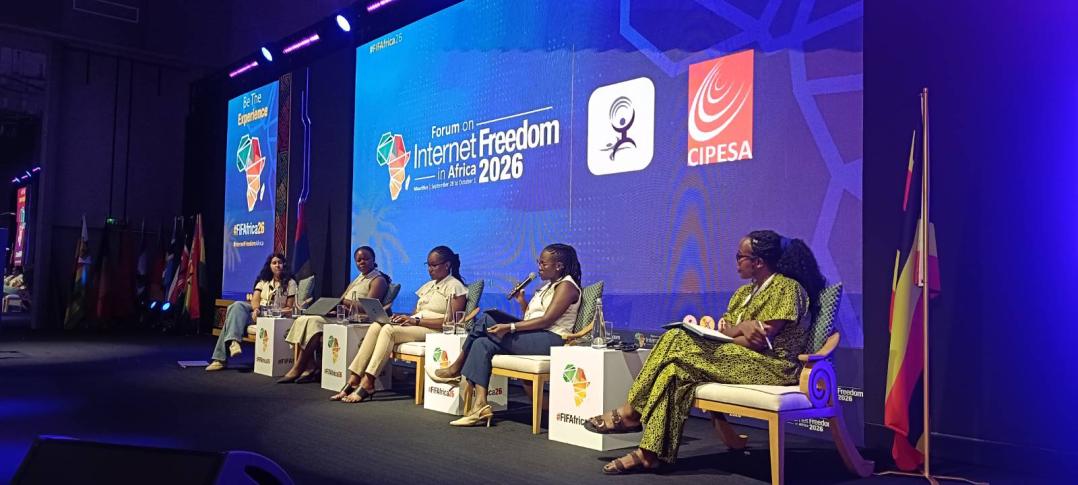
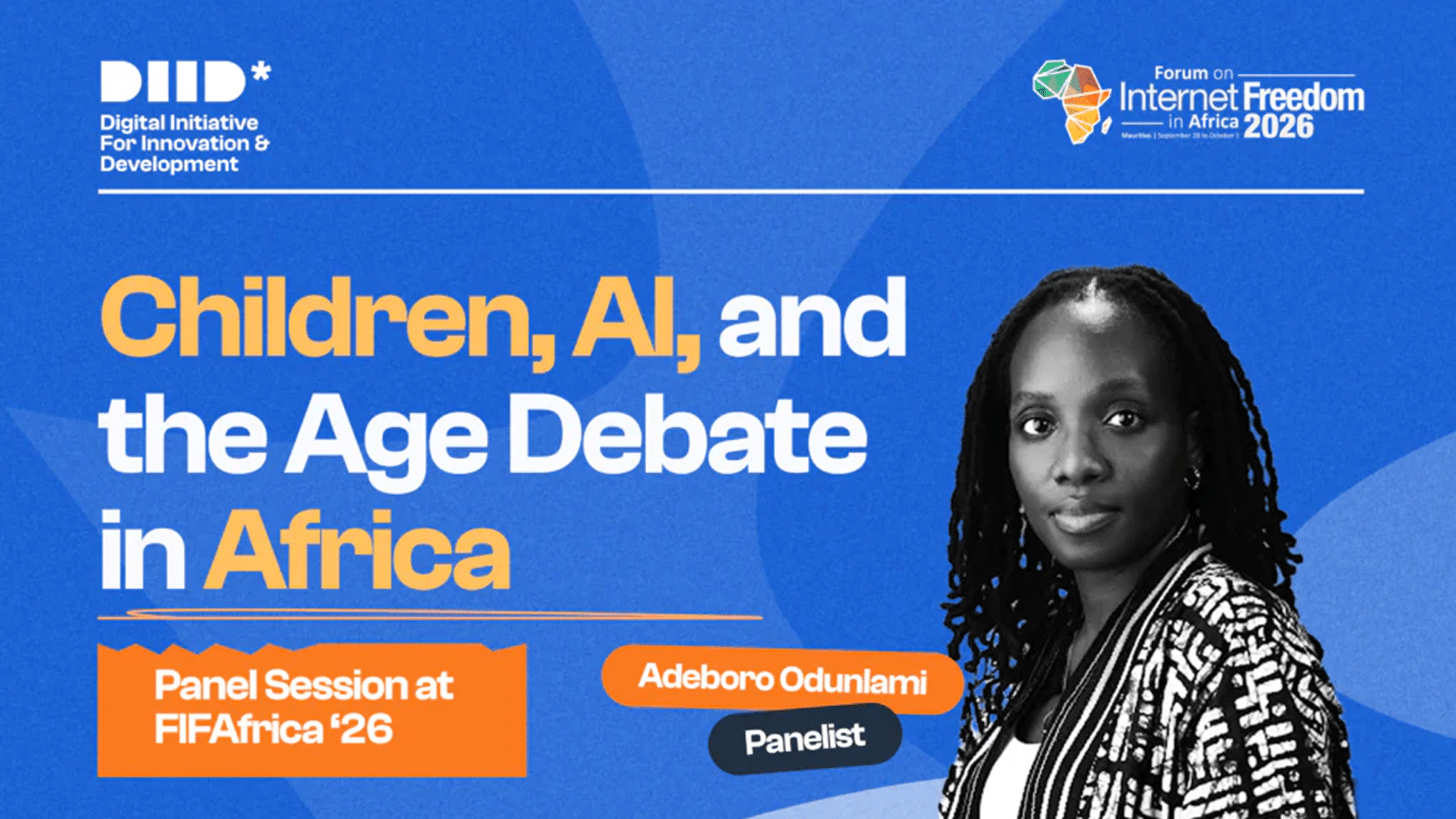
At this year’s forum on Internet Freedom in Africa (FIFAfrica ‘26), our Executive Director, Adeboro Odunlami, raised the above as a quiet but pointed concern.
The forum, organized by CIPESA, ran from 28 September to 1 October 2026 in Mauritius. Adeboro represented DIID on the panel “Children, AI, and the Age Debate in Africa”, speaking alongside Belinda Matore (University of Pretoria), Afia Asantewaa Asare-Kyei (Meta’s Oversight Board), Yasmin Ahmed (FemTech Law Initiative) and Lillian Kariuki (Africa Child Online Safety Alliance).
The panel’s focus was to discuss a question of AI, social media and age-based bans in Africa, as countries like Australia, Gabon, and the UK have moved to ban under-16s from social media.
A ban gives political salience, but it is not a holistic solution.
Adeboro opened with a wider picture of what is at stake. Africa is projected to be home to the youngest population in the world by 2030. She also noted a Research where only about 2 percent of adults passed a test on divergent thinking, while roughly 90 percent of children in nursery school passed the same test. This showed that children have a natural capacity for creative, outside-the-box thinking. Generative AI tools, used without guidance, risk handing them answers before they ever practice using that capacity. A generation raised this way enters the labour force well served by tools, but under-trained in thinking for themselves. A child’s pre-existing disadvantage may compound problems here too. That is, children who start behind stay behind, carried further apart by how differently they get to use these tools.
Against that backdrop, Adeboro’s case against a blanket ban has several layers.
A ban offers real political value to politicians. To the public, it comes off as a decisive action; much stronger than saying “we conducted a risk assessment”. This is why policymakers reach for it since many parents already clamour for it.
A blanket ban can also regulate the wrong place. Platforms flagged by UNICEF for risk include messaging apps that are outside Meta’s own oversight structures, and non-consensual images frequently move through platforms like Telegram that a social-media ban might not reach at all.
And the evidence has not caught up to the policy. Bans are spreading fast. Australia, the UK, Rwanda and Gabon have all moved on it, and more countries are following. But the early data from countries further along only tells part of the story. The number of accounts are dropping on major platforms, while usage rises on smaller, less regulated ones. However, a reduction in accounts is not the outcome anyone is actually after. Child online safety is.
Adeboro’s conclusion on this point was that children’s attention has become a commodity, and the fix starts with the design of the platforms built to capture it. Safety by design and platform accountability, using the least restrictive method available, address the actual mechanism at work. Whereas, a ban only addresses its visibility.

Where DIID stands
This is the version of child online safety DIID keeps advocating for. Rather than look for a single switch to flip, policy should be based on a set of deliberate, evidence-led choices. Regulation should target the actual harm and be built with an honest view of who it reaches, and the practical capacity to enforce it. Children should be treated as participants rather than subjects.
We were glad to bring this thinking to FIFAfrica26, in a room full of people working on the same questions from different corners of the continent.
This article was first published by the Digital Initiative for Innovation and Development (DIID). Click here to read more on its website.